🎧 Yul's Korea Audio Guide
Bukchon Hanok Village

Narrated in English with Korean phrases by YUL of KVIBE IDOLS.
🎵 Background music: Still in That Spring (그 봄에 머물러) — KVIBE IDOLS · Listen to the full song →
Full transcript
Annyeong, yeoreobun! It's Yul, and shh... we have to whisper a little here. Welcome to Bukchon Hanok Village. Why are we whispering? Because people actually live in these beautiful houses. I'll explain. But first, a story.
Bukchon means north village. It sits between two royal palaces, Gyeongbokgung and Changdeokgung. So who lived here in the Joseon dynasty? Of course, the VIPs: high-ranking officials and noble families called yangban. If you wanted a short commute to the palace, this was the neighborhood.
Now here's the part most tourists never hear. In the 1920s and 30s, during the Japanese colonial period, more and more Japanese-style buildings were spreading into central Seoul. Then a Korean businessman named Jeong Se-kwon stepped up. He bought land and built rows of hanok, traditional Korean houses, so that Korean families could keep living here, in Korean homes. Many of the hanok you see in Bukchon today come from that time. So these pretty alleys are actually a quiet act of protecting Korean culture. Respect!
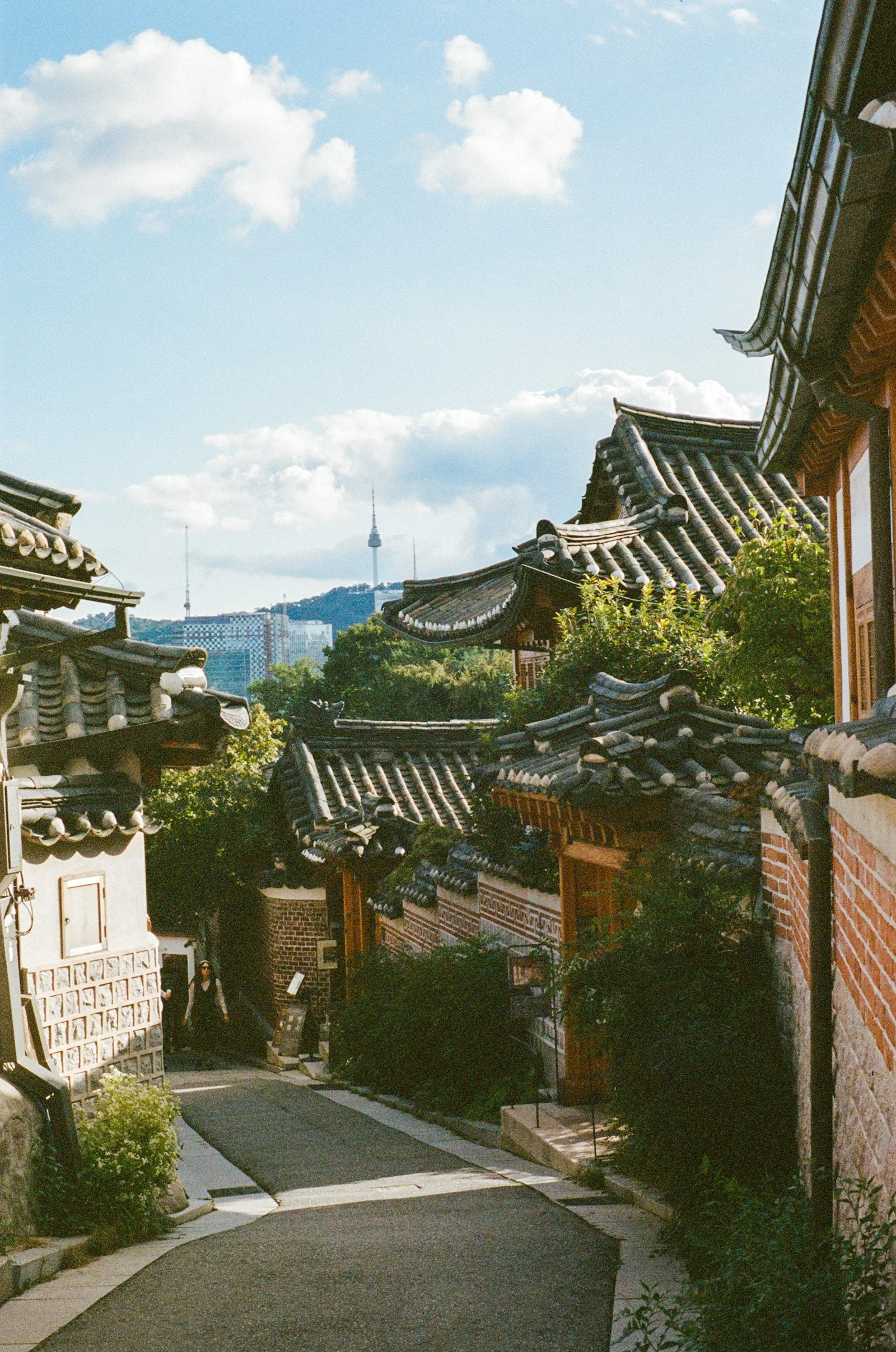
Look at the roofs. Those curved tiles are called giwa, and the way the roofs line up like waves is what makes Bukchon so photogenic. Find the spot where you can see the old hanok roofs with the modern city behind them. Past and present, in one photo.
Yul's tip, and it's important! In the main area, visitors are only allowed during the day, roughly from 10 a.m. to 5 p.m., because residents need their peace. So come early, keep your voice down, don't open any gates, and you'll be a five-star tourist.
Next time, I'll tell you more stories from all around Korea. Until then, annyeong!