🎧 Yul's Korea Audio Guide · Korean Culture
Chuseok Explained: Korean Thanksgiving Traditions, Food and History

Narrated in English with Korean phrases by YUL of KVIBE IDOLS. Also on Spotify and YouTube.
🎵 Background music: Red Roof (빨간 지붕) — KVIBE IDOLS · Listen to the full song →
Full transcript
Annyeong! It's Yul from KVIBE IDOLS. Today let's talk about one of the biggest holidays in Korea. Chuseok! Some people call it Korean Thanksgiving.
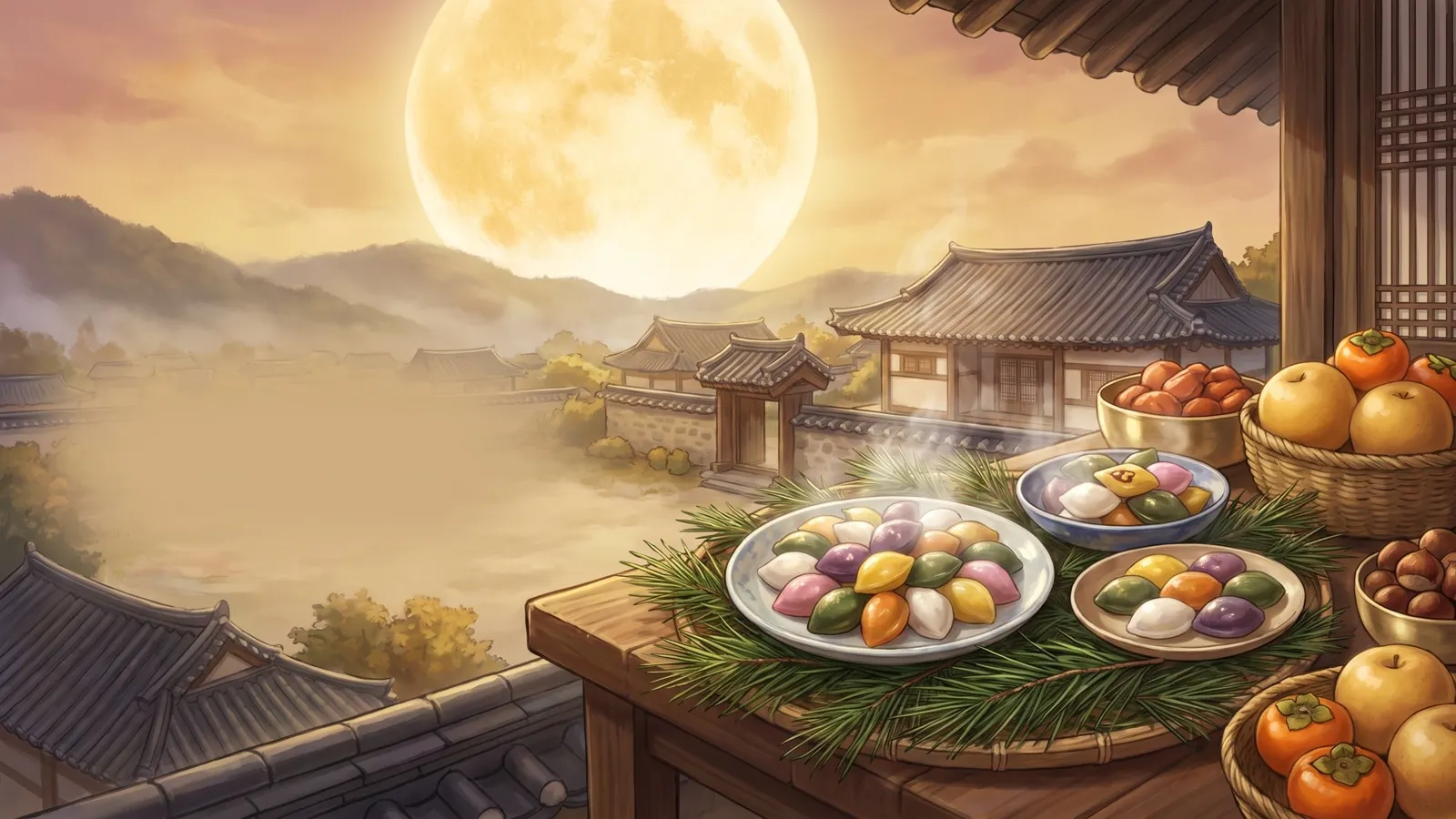
Chuseok falls on the fifteenth day of the eighth month of the lunar calendar, when the full moon is the brightest of the year. Usually that's in September or early October. It's a harvest festival, a time to thank our ancestors for the year's crops.
Its history is old. One record says that in the Silla kingdom, about two thousand years ago, women of the capital held a month-long weaving contest that ended on this day, with a big party. The losing team had to serve food and drinks to the winners!
What do families do today? Millions of people travel back to their hometowns at the same time, so the highways become giant parking lots. Families hold a ceremony called charye, setting a table of food for their ancestors. Then they visit the family graves to clean them. It's called beolcho.
And the food! The star of Chuseok is songpyeon, small half-moon rice cakes filled with sesame, honey, or beans, steamed on pine needles. There's an old saying: if you make pretty songpyeon, you'll have a pretty daughter.
Yul's tip! If you visit Korea during Chuseok, many shops close for a few days, but palaces and folk villages hold special events, often with free entry for people wearing hanbok. Happy Chuseok! Chuseok jal bonaeseyo!