🎧 Yul's Korea Audio Guide
Imjingak & the DMZ

Narrated in English with Korean phrases by YUL of KVIBE IDOLS.
🎵 Background music: Letter on the Wind (바람의 편지) — KVIBE IDOLS · Listen to the full song →
Full transcript
Annyeong, yeoreobun! It's Yul. Today our story is a little quieter and a little more serious. We're at Imjingak in Paju, about seven kilometers from the line that divides the Korean Peninsula.
The Korean War began in 1950. In 1953, an armistice agreement stopped the fighting, but here's the twist: it was a ceasefire, not a peace treaty. A line was drawn across the peninsula, with a buffer zone stretching about two kilometers on each side. That's the DMZ, the Demilitarized Zone. And the strange part? It's one of the most heavily guarded borders in the world.
Imjingak was built in 1972, for people who could not return to their hometowns in the North. On holidays like Seollal and Chuseok, displaced families come to the memorial altar, Mangbaedan, and bow toward the homes they left behind.
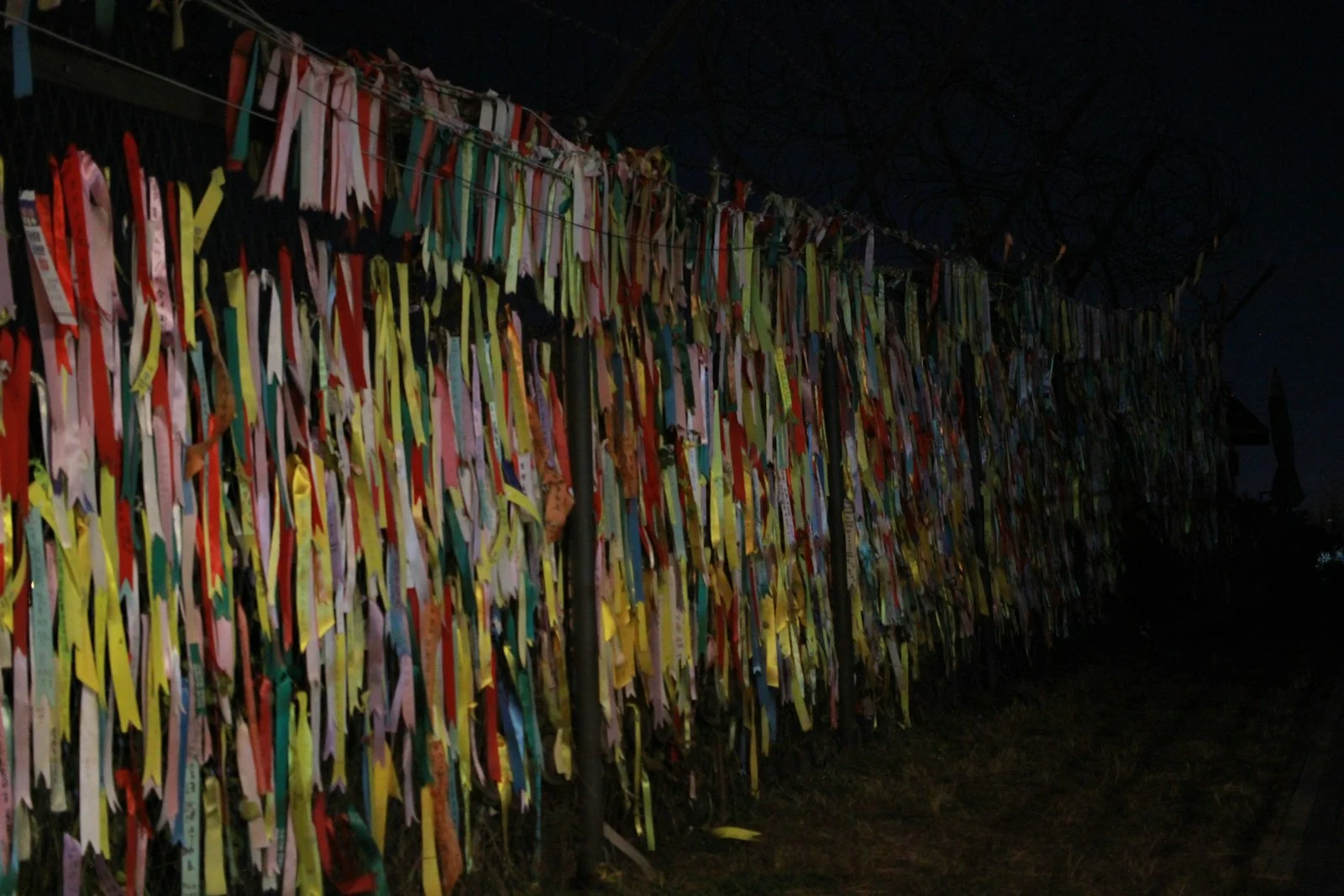
Now look at that old wooden bridge. This is the Freedom Bridge. In 1953, more than twelve thousand prisoners of war crossed this bridge to come home. Today, visitors tie colorful ribbons on the fences nearby, with wishes for peace and reunion.
And that battered old locomotive? It was stopped near the DMZ on the last day of 1950 and destroyed during the war. Today it is registered cultural heritage.
Yul's tip! Imjingak itself is easy to visit without special permits. To go further, to places like the Third Tunnel or Dora Observatory, you need an official tour, and you should bring your passport.
Next, let's travel back in time to a Joseon village where K-dramas come to life. Annyeong!