🎧 Yul's Korea Audio Guide
Haeinsa Temple & Tripitaka Koreana

Narrated in English with Korean phrases by YUL of KVIBE IDOLS.
🎵 Background music: Letter on the Wind (바람의 편지) — KVIBE IDOLS · Listen to the full song →
Full transcript
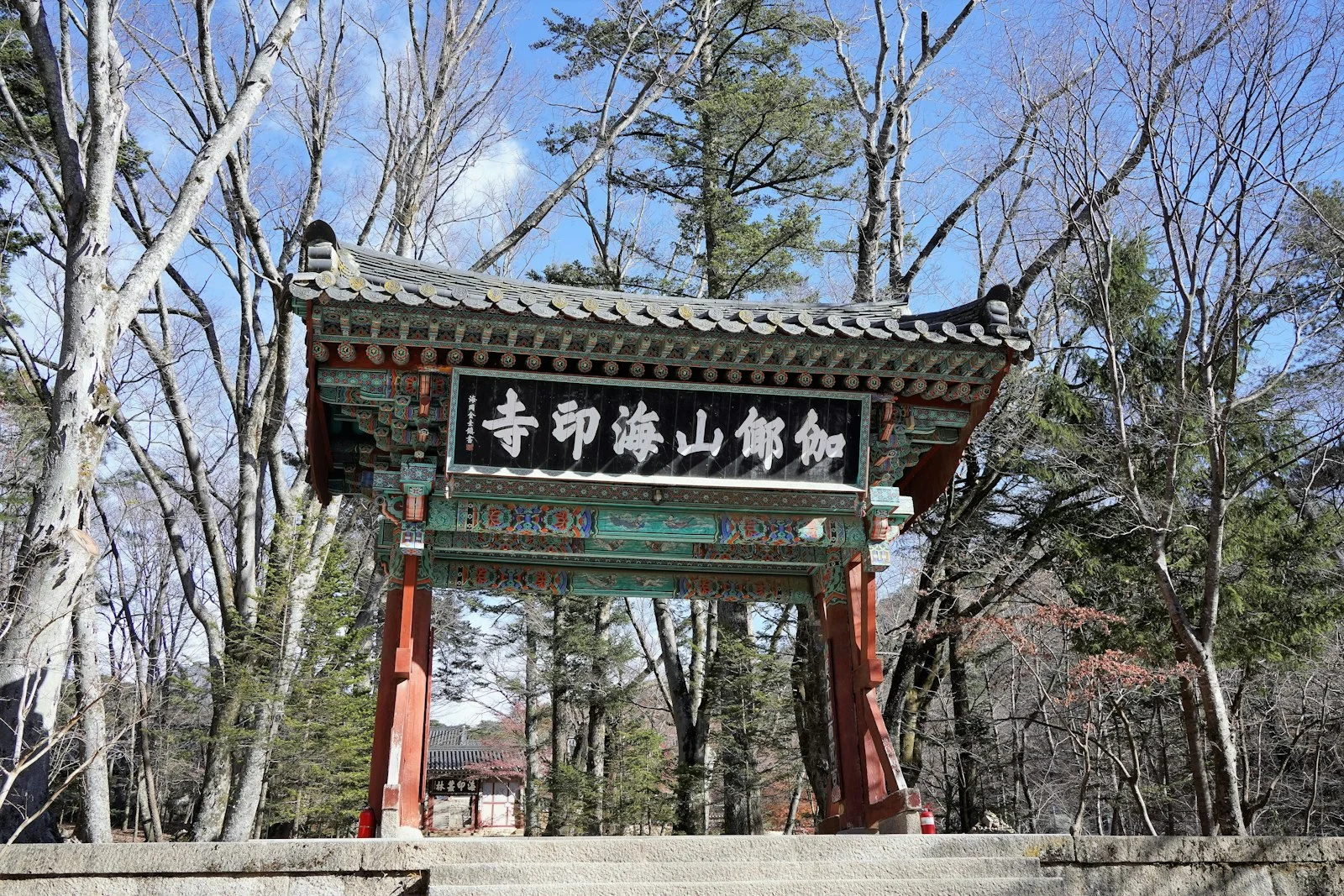
Annyeong, yeoreobun! Yul here, deep in the mountains of Gayasan. Shh, this is a library. But not a normal one. Its books are made of wood, and there are more than eighty-one thousand of them! Welcome to Haeinsa Temple.
Haeinsa was founded in 802, during the Silla kingdom. But its greatest treasure came later. In the 1230s, Mongol armies invaded Goryeo, and in 1232 an older set of Buddhist scripture woodblocks went up in flames. So what did Goryeo do? Carve it all again! Starting in 1237, for about twelve years, craftsmen carved the whole Buddhist canon onto wooden blocks, tens of millions of characters, praying for the Buddha to protect the country. We call it the Tripitaka Koreana.
Since 1398, the blocks have been kept here, in storage halls called Janggyeong Panjeon. And these buildings are genius. Windows of different sizes on the front and back let the air flow. The clay floor is mixed with charcoal, lime and salt to absorb moisture. No air conditioner, and the wood has survived for centuries!
Now the twist. In 1951, during the Korean War, a pilot named Kim Young-hwan was ordered to bomb the temple, as part of a campaign against guerrillas. He refused, and led his squad over Haeinsa without dropping a single bomb. Thanks to him, the treasure survived. Respect!
Yul's tip! You can peek at the woodblock shelves through the wooden lattice windows, but no touching. The storage halls became a UNESCO World Heritage Site in 1995.
Next, a riverside village where a queen celebrated her birthday. Kaja!