🎧 Yul's Korea Audio Guide
Hongdae
Narrated in English with Korean phrases by YUL of KVIBE IDOLS.
🎵 Background music: Letter on the Wind (바람의 편지) — KVIBE IDOLS · Listen to the full song →
Full transcript
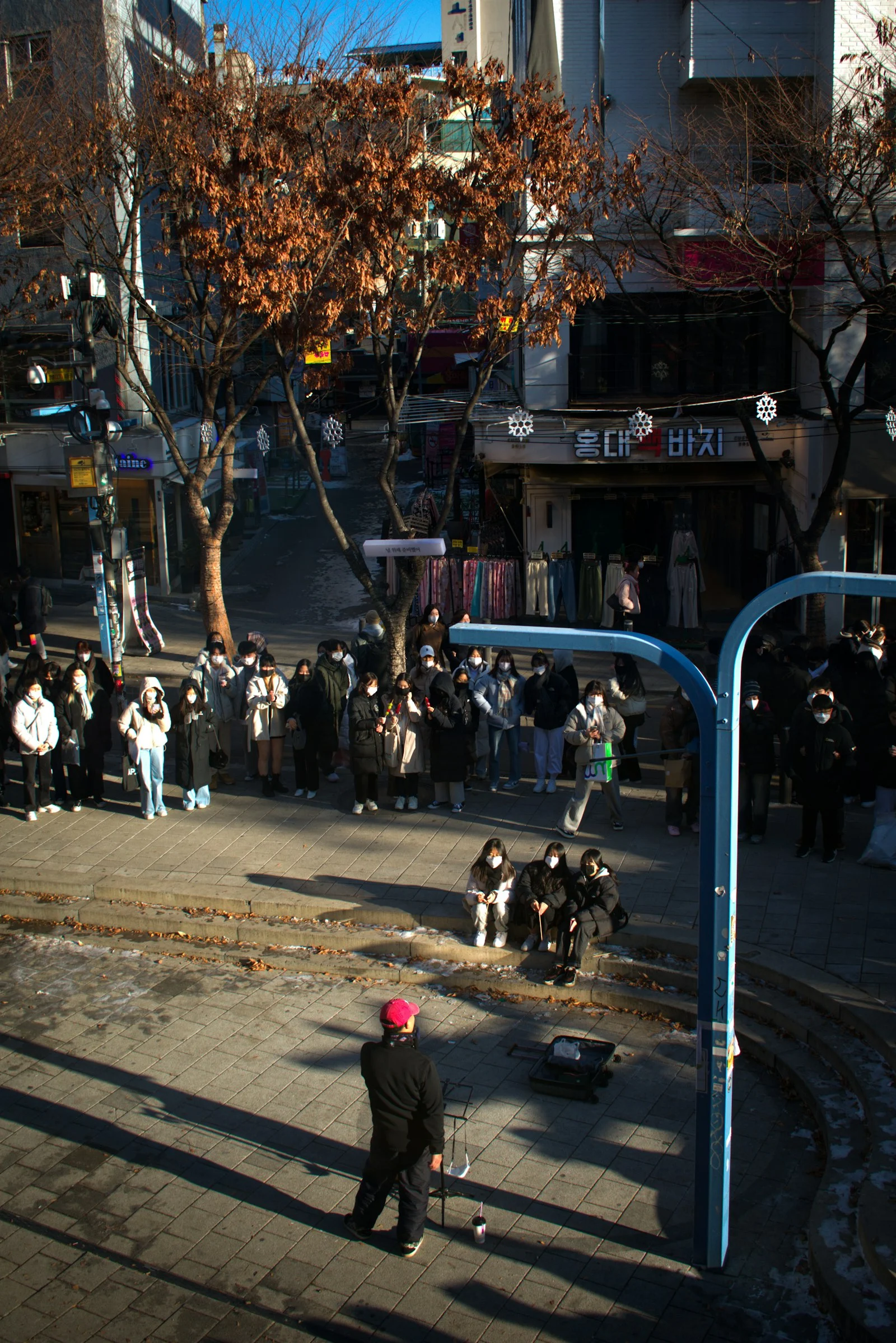
Annyeong, yeoreobun! Yul here. Can you hear that? Guitars, drums, someone singing their heart out on the sidewalk. Welcome to Hongdae, the most musical neighborhood in Seoul!
Hongdae is short for Hongik Daehakgyo, Hongik University. It was founded in 1946 and is famous for its art and design programs. Now picture the early 1990s. The rock scene used to be in nearby Sinchon, but rents there went up, so musicians moved here. Art students, cheap rent, small dark basements. Perfect recipe for something new.
And here's the plot twist. Back then, live music in bars wasn't even legal! Many clubs registered as restaurants just to get around the rule. A tiny club called Drug opened in 1994 and became the home of Korean punk. In 1995, musicians gathered there for a tribute concert one year after Kurt Cobain died, and many people call that night the start of Korea's indie revolution. Bands like Crying Nut grew up in little Hongdae clubs. Finally, in 1999, live performances in bars became legal. Freedom! Rock and roll!
Today, the music has spilled out onto the streets. On weekend evenings, buskers fill the sidewalks: dance crews covering K-pop, singers with one guitar, rappers with a speaker.
Yul's tip! Come after sunset on a Friday or Saturday. Walk the busking street first, then find a small live club and catch an indie band. If you love a performer, clap loudly. That's the Hongdae spirit.
Next, let's visit old shoe factories that became the coolest cafes in Seoul. Kaja!