
🎧 Yul's Korea Audio Guide
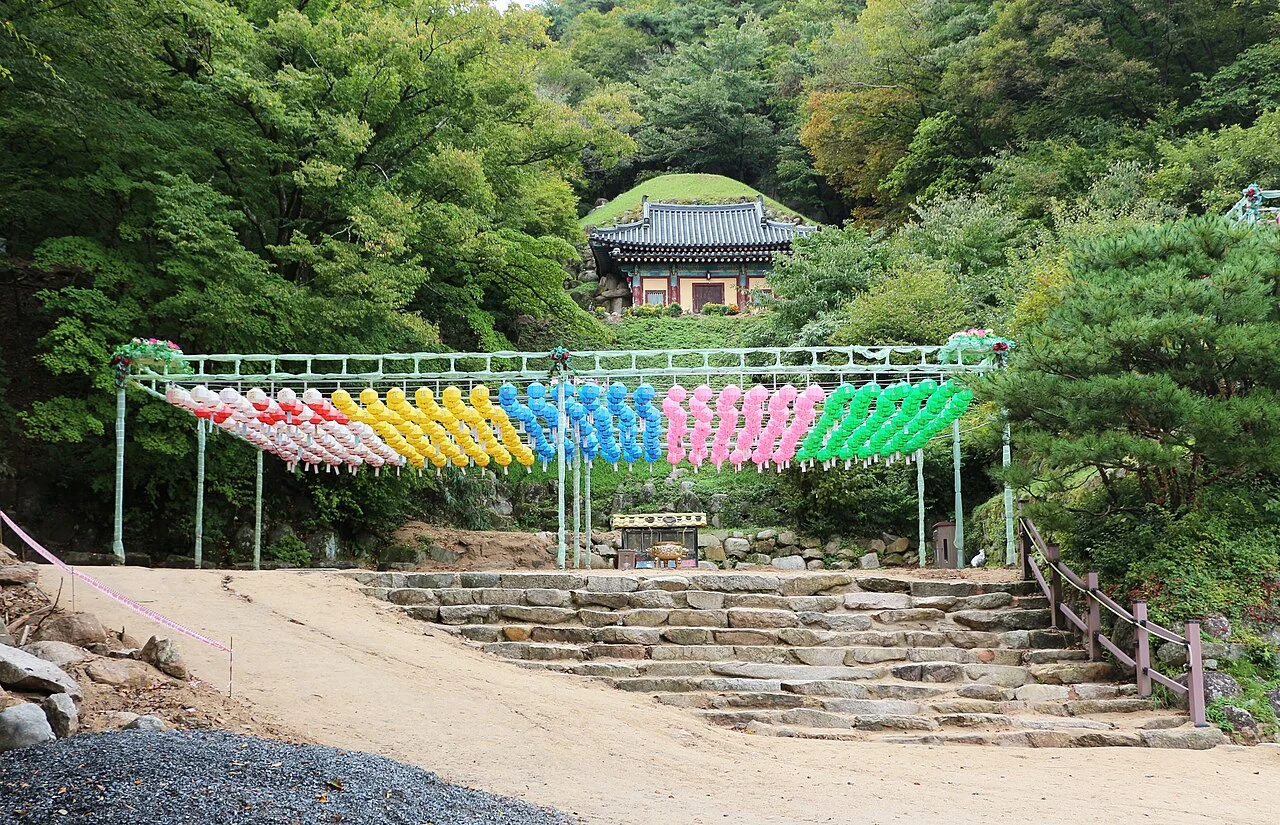
Seokguram Grotto

Narrated in English with Korean phrases by YUL of KVIBE IDOLS.
🎵 Background music: Still in That Spring (그 봄에 머물러) — KVIBE IDOLS · Listen to the full song →
Full transcript
Annyeong, yeoreobun! Yul here. Today we climb a mountain in Gyeongju to meet someone who has been sitting in the same spot, perfectly calm, for more than twelve hundred years. Welcome to Seokguram Grotto!
Remember Kim Dae-seong, the devoted son from Bulguksa? Legend says he built Bulguksa for his parents in this life, and this grotto for his parents from a past life. Work started in 751, and the Silla court finished it in 774, after Kim had passed away.
Now here's what makes it daebak. This is not a natural cave. Silla builders made it by hand, fitting cut granite stones together into a dome, then covering it with earth. Inside sits a Buddha about three and a half meters tall, surrounded by carved guardians and bodhisattvas. The grotto overlooks the East Sea, and that calm face is often called one of the greatest Buddhist sculptures in Asia.
But plot twist! In the 1910s, during the Japanese colonial period, the grotto was taken apart, rebuilt, and covered in concrete. Big mistake. The stone couldn't breathe anymore. Moisture got trapped, water leaked in, and the sculptures began to suffer. In the 1960s, Korea launched a major restoration, using machines to control temperature and humidity. That's why today you see the Buddha through a glass wall.
Yul's tip! Photos are not allowed inside, so just stand still and take it in with your own eyes. In 1995, Seokguram and Bulguksa became a UNESCO World Heritage Site together.
Next, let's walk among giant green hills where Silla kings are sleeping. Kaja!
More audio guides

Photo: Bernard Gagnon, CC0, via Wikimedia Commons